Sustainable finance in district heating: heat from the river and wastewater in Kołobrzeg | POLSIF Talks #45
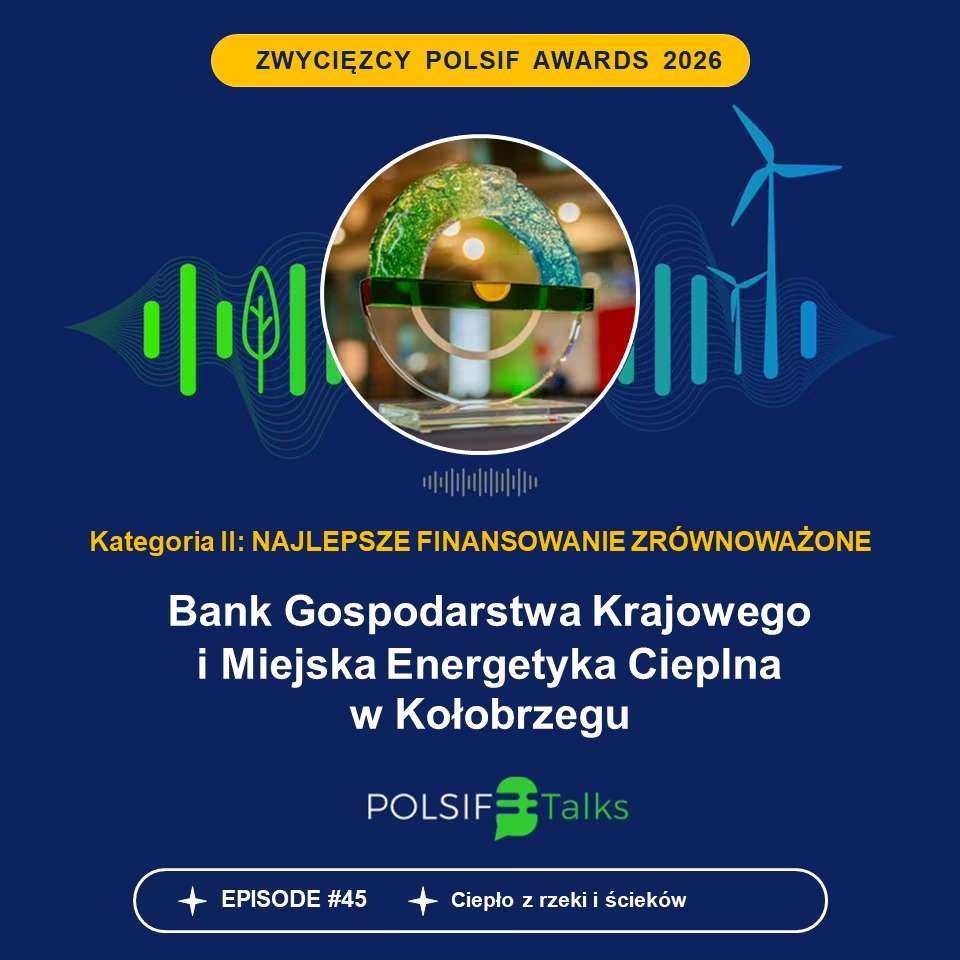
How do you finance an investment that is not directly covered by the EU Taxonomy without exposing yourself to accusations of greenwashing? We talk to the winners of the POLSIF Awards 2026 in the Best Sustainable Financing category: Bank Gospodarstwa Krajowego and Miejska Energetyka Cieplna in Kołobrzeg.
MEC Kołobrzeg will source heat from the Parsęta river and from domestic wastewater using heat pumps. According to BGK, heat pumps have never before been used on this scale in Poland. The EU Taxonomy was developed in 2017-2019, before this technology was deployed in the first European cities. That is why there are no ready-made criteria for it.
In the conversation, we follow the project from an idea developed in the Kołobrzeg energy cluster to the loan agreement. We also explain how the bank assessed the investment from an environmental and financial perspective.
In this episode you will learn:
- how BGK mapped an innovative technology to the existing Taxonomy criteria and verified the DNSH principle;
- why the refrigerant requirement (GWP not higher than 150) matters for a spa town;
- which two pillars the bank relies on when assessing a pioneering project: feasibility and repayment capacity;
- how to combine bank financing with a grant from NFOŚiGW (the National Fund for Environmental Protection and Water Management);
- what a municipal company should prepare to benefit from the BGK offer supporting sustainable investments;
- what benefits the project will bring to residents and spa visitors: lower emissions of CO₂, particulate matter, SO₂ and NOx, and greater security of heat supply.
Guests: Andrzej Olichwiruk, President of the Management Board of Miejska Energetyka Cieplna in Kołobrzeg; Mariusz Denkiewicz, Director of the Financing Structuring Office at BGK; Bartosz Silczak, Director of the ESG Risk Office at BGK.
Episode length: 25 minutes.

LEGAL CENTER
SUSTAINABLE
INVESTMENT AND FINANCE

STANDARDS CENTER
SUSTAINABLE
INVESTMENT AND FINANCE

Research Center
SUSTAINABLE
INVESTMENT AND FINANCE